
If you’ve ever wondered why some skincare costs more than a supermarket serum and promises to do more than sit on the surface, the answer usually comes down to one word: cosmeceutical skincare. It’s a category that sits between everyday cosmetics and prescription dermatology, and understanding what it actually means is the first step to knowing whether it’s right for your skin. The term gets used loosely across the skincare industry, which makes it genuinely difficult for consumers to know what they’re actually paying a premium for, so it’s worth unpacking properly, starting with what separates a cosmeceutical formulation from a well-marketed cosmetic one.
What Does Cosmeceutical Actually Mean?
How Cosmeceuticals Differ From Everyday Cosmetic Skincare
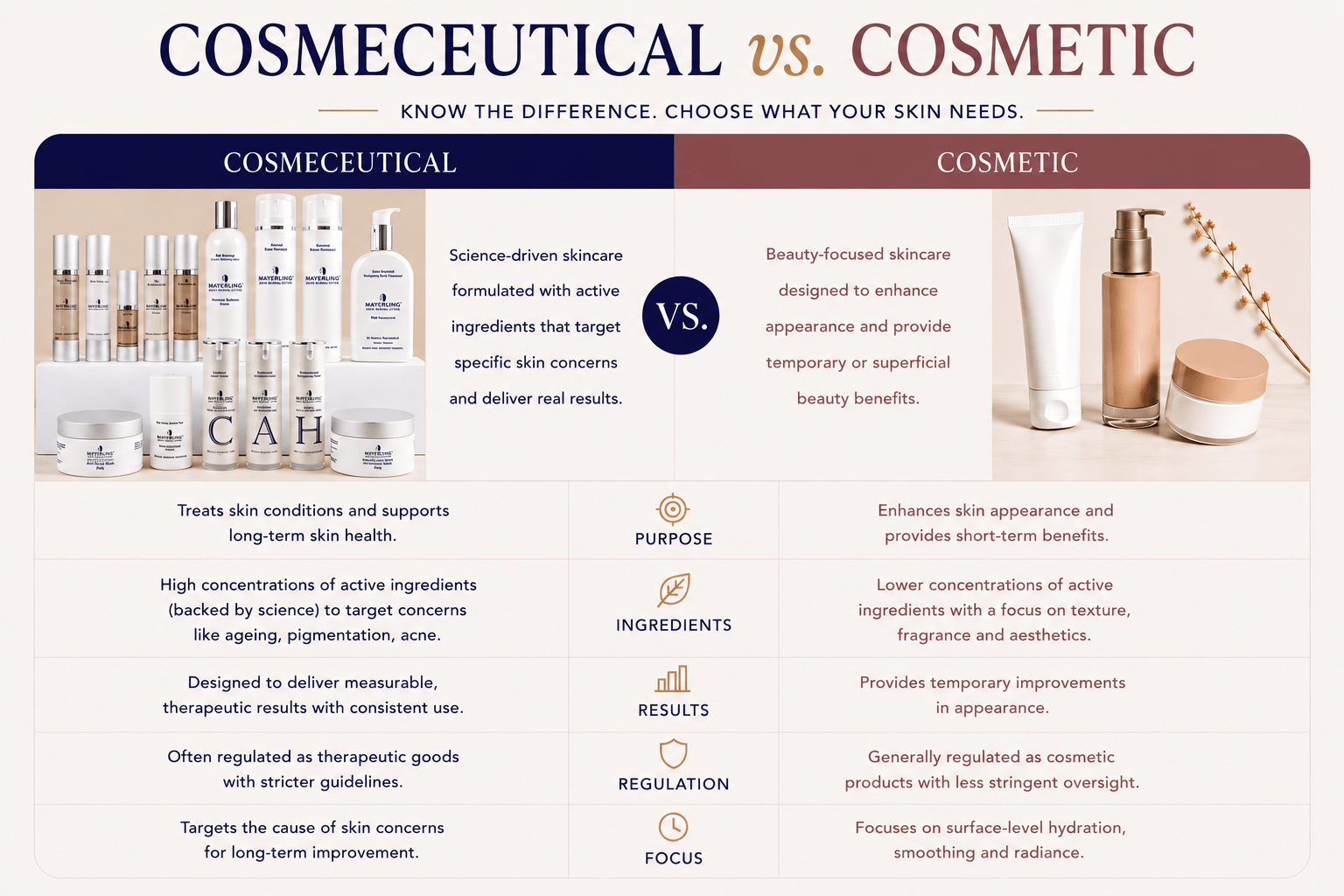
Cosmetic skincare is generally formulated to cleanse, moisturise, or temporarily improve the appearance of the skin. It does a genuinely useful job, but it’s designed to work with the skin’s surface rather than change what’s happening beneath it. Cosmeceutical skincare is a different proposition entirely: it’s formulated with higher concentrations of active ingredients, intended to influence the skin at a cellular level rather than sit on top of it, targeting the underlying processes that determine how skin actually looks and behaves over time.
Why the Distinction Matters for Real Results
This distinction isn’t just marketing language. Cosmeceutical vs cosmetic skincare is genuinely a difference in what the product is designed to do — one manages the surface, the other is formulated to support meaningful, measurable change in skin texture, tone and structure over time. Understanding this difference is what allows a consumer to make an informed choice, rather than assuming a higher price automatically means a better product.
The Science Behind Skin Resurfacing
How Resurfacing Supports Cellular Turnover
Skin naturally renews itself through a process of cellular turnover, but this process slows with age and environmental exposure, which is part of why skin can start to look duller or less even over time. Resurfacing formulations are designed to support and encourage that turnover, helping newer, healthier skin cells reach the surface more consistently, rather than allowing older, dulled cells to sit there longer than they should.
Why Texture Is the Foundation of Younger Looking Skin
Texture is often the first thing people notice about skin, even before tone or fine lines — it’s what determines how skin catches light, how makeup sits, and how smooth skin genuinely feels to the touch. A skin resurfacing science-led approach treats texture as the foundation everything else builds on, which is why Mayerling’s formulations are built around resurfacing rather than simply masking surface concerns with temporary hydration or shine.
Who Developed Mayerling and Why It Matters
A Formula Born From Clinical Practice
Mayerling wasn’t developed in a marketing meeting. The formulations grew out of genuine clinical practice, shaped by what actually worked for real skin concerns in a clinical setting, rather than reverse-engineered from a trend or a competitor’s ingredient list. That practical, results-first starting point is still the standard every Mayerling formulation is measured against today. You can read the full story on our About Us page.
25 Years of Trusted Results in Australian Clinics
That clinical foundation has been refined over 25 years of use in Australian clinics, which is a meaningful thing to be able to say in a category where many brands are only a few years old. Two and a half decades of real-world use, across countless skin types and concerns, has shaped the formulations into something genuinely tested by time rather than a single round of pre-launch trials. It’s part of why clinics and salons across the country continue to stock and recommend Mayerling to their clients, and why so many of those relationships have lasted for years rather than seasons.
What to Look for in a Genuine Cosmeceutical Product
Active Ingredient Concentrations
Genuine doctor formulated skincare Australia brands are transparent about what’s actually in the bottle, and at what concentration. Concentration matters because most active ingredients only produce meaningful change in the skin above a certain threshold – a product can list an impressive-sounding active on the label and still contain far too little of it to do anything measurable. Vague ingredient lists or proprietary blends that hide actual percentages are a sign a product may be cosmetic in substance, whatever it’s marketed as.
Clinical Testing and Transparent Formulas
Real cosmeceutical products are backed by clinical testing and formulation transparency, not just impressive-sounding ingredient names. Our Transparent Formulas page sets out exactly what’s in every Mayerling product and why, and our Ingredient Glossary is a useful resource if you want to understand what a specific active actually does.
Is Cosmeceutical Skincare Right for You?
Common Skin Concerns Cosmeceuticals Address
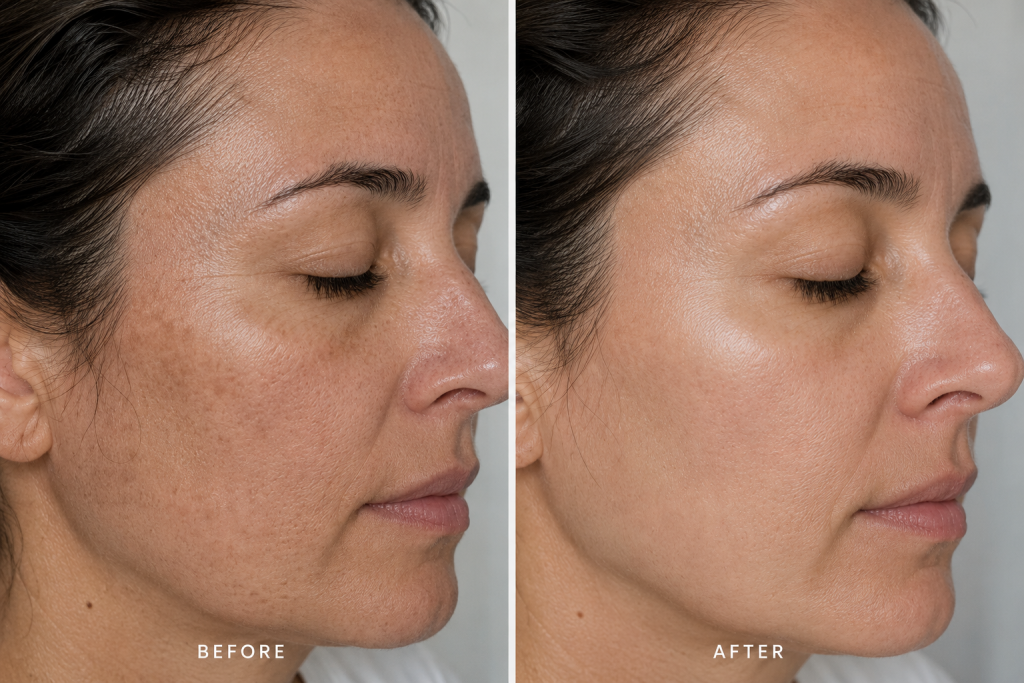
Clinical grade skincare Australia brands like Mayerling are typically chosen by people dealing with pigmentation, uneven texture, fine lines, or skin that hasn’t responded meaningfully to standard cosmetic products. If you want to see what this looks like in practice, our Real Results page shares genuine before and after outcomes from real clients.
Using Cosmeceuticals at Home and in Clinic
Cosmeceuticals can be used both at home and as part of an in-clinic treatment plan. Many people start with a home routine from our De Age and Rejuvenate range and build toward an in-clinic treatment such as the De Ageing Facial, which is the clinical expression of the same resurfacing philosophy behind the home range.
Frequently Asked Questions
Cosmeceutical products are formulated with higher concentrations of active ingredients intended to change the skin at a cellular level, while cosmetic products are generally designed to cleanse, moisturise or temporarily improve appearance without altering skin structure.
No. Cosmeceuticals sit between everyday cosmetics and prescription dermatology, offering clinically informed formulations without requiring a prescription, though many are recommended and supplied through clinics.
Most people notice early changes in texture and brightness within four to six weeks, with more significant improvements in pigmentation and fine lines visible after eight to twelve weeks of consistent use.
Yes, many Mayerling products are designed for home use, though a clinic consultation can help tailor the routine to specific concerns such as pigmentation, acne or sensitivity.
It can be, provided the routine is introduced gradually and matched to the individual’s skin tolerance, which is why professional guidance from a stockist clinic is recommended for first time users.
Finding Mayerling Near You
Mayerling is available through a strong network of stockist clinics, salons and spas across Sydney and the Northern Beaches, where the brand has some of its longest-standing clinic relationships, with a growing presence in Brisbane and Queensland following recent stockist and event activity, and availability through partner clinics Australia wide. Wherever you’re based, the same clinically informed formulations and professional guidance are part of the experience. If you’d like to experience results driven skincare with professional guidance, use our Find a Clinic page to locate a stockist near you.
For a neutral, third-party definition of cosmeceutical ingredients and how they’re regulated in Australia, the Australasian College of Dermatologists provides useful public information. For background on skin barrier function and cellular turnover more broadly, the Australasian Journal of Dermatology is a reputable, peer-reviewed source.
