
Sun damage is one of the most common skin concerns Australian clients bring to clinics, salons and spas. Years of UV exposure can leave the skin looking dull, uneven, rough or pigmented, and many clients begin searching for professional skin renewal products once homecare alone no longer feels enough.
Chemical peels can play a valuable role in professional skin repair programmes. When selected and performed appropriately, they support visible skin renewal by exfoliating surface build-up and helping reveal smoother, brighter-looking skin. For clinics, salons and spas, peel-based treatments also create an opportunity to offer more complete client journeys, from consultation and treatment through to post-peel skincare and maintenance.
For businesses looking to strengthen their professional skincare offering, Mayerling Skincare supports clinics, salons and spas with treatment-focused products designed to complement professional skin programmes.
What Is Sun-Damaged Skin?
Sun-damaged skin refers to visible changes that can occur after repeated exposure to ultraviolet radiation. In Australia, this is a particularly relevant concern because UV exposure is a major cause of skin damage, premature ageing and skin cancer, and Cancer Council Australia recommends sun protection when the UV Index is 3 or above.
Common signs clients may describe include:
- Uneven skin tone
- Pigmentation or dark spots
- Dullness
- Rough or dry texture
- Fine lines
- Loss of radiance
- A generally “tired” or weathered appearance
For skin professionals, it is important to distinguish cosmetic concerns from lesions or skin changes that require medical assessment. Any changing, persistent, bleeding, crusting or suspicious spot should be referred to a GP, dermatologist or qualified medical practitioner before cosmetic treatment.
How Chemical Peels Support Visible Skin Repair
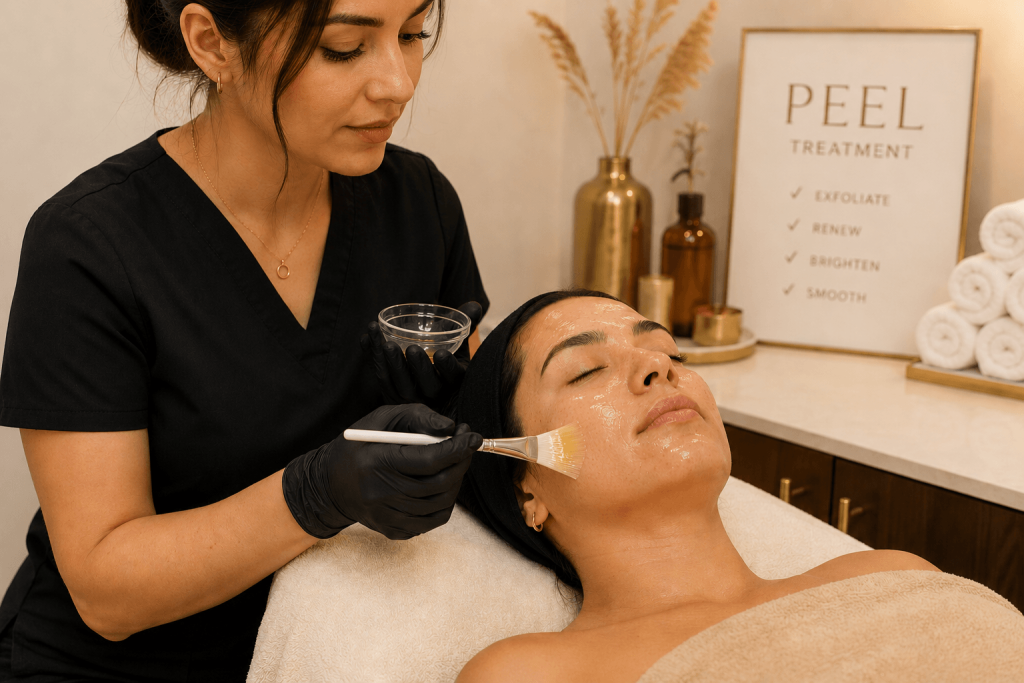
A chemical peel is a professional skin treatment that applies a chemical solution to the skin to exfoliate surface layers. The American Academy of Dermatology describes chemical peels as treatments that remove layers of skin so smoother-looking skin can appear.
In cosmetic skincare, “skin repair” usually refers to improving the visible condition of the skin rather than reversing all underlying UV damage. Chemical peels can support this by helping to:
- Refine uneven texture
- Brighten dull-looking skin
- Improve the appearance of superficial pigmentation
- Support smoother-looking skin
- Refresh the complexion
- Prepare the skin for a structured homecare programme
The American Society for Dermatologic Surgery notes that chemical peels may improve the appearance of sun-damaged skin by removing the outer layer of older skin, with the replacement skin often appearing smoother.
Why Peels Are Useful For Sun-Damaged Skin
Sun-damaged skin often presents as a combination of concerns rather than one isolated issue. A client may have pigmentation, uneven tone, roughness and fine lines at the same time. This makes professional peels useful because they can be incorporated into broader skin renewal programmes.
A light chemical peel may help improve skin texture and tone, with subtle results that can build through repeated treatments. Medium-depth peels may create more visible smoothing, but they also require more careful client selection, preparation and aftercare. Mayo Clinic notes that results are not permanent, as ageing and new sun damage can lead to further lines and skin colour changes over time.
For clinics, salons and spas, this reinforces the importance of ongoing skincare education. A peel should not be presented as a one-off fix. It works best as part of a managed treatment journey that includes consultation, preparation, aftercare, maintenance and daily sun protection.

The Difference Between Skin Repair and Skin Renewal
Clients often use the phrase “repair my skin” when they want their skin to look brighter, smoother, calmer or healthier. In professional skincare, it is helpful to explain that chemical peels support skin renewal rather than literally undoing all past damage.
Skin renewal refers to the process of exfoliating built-up surface cells and encouraging a fresher-looking complexion. Skin repair, in a cosmetic context, may include supporting the skin barrier, improving hydration, reducing visible dullness and helping the skin look more even.
This distinction helps build trust. It avoids exaggerated claims while giving clients a realistic understanding of what a professional peel programme can achieve.
Benefits of Professional Chemical Peels for Clinics, Salons And Spas
Beyond supporting visible skin renewal, professional chemical peels can also help clinics, salons and spas create stronger treatment experiences, improve client retention and expand skincare retail opportunities
Improved visible tone and texture
Many sun-damaged clients are concerned with roughness, dullness and uneven tone. Professional peels can help smooth the look of the skin surface and improve radiance, particularly when paired with appropriate homecare.
Support for pigmentation-focused programmes
Peels may be used as part of a programme for superficial pigmentation and uneven skin tone. However, pigmentation can be complex and may worsen if the wrong treatment is used, particularly in clients prone to post-inflammatory hyperpigmentation. Professional assessment is essential.
A stronger treatment journey
For skincare businesses, peels allow you to create structured client journeys rather than isolated treatments. A treatment plan may include skin preparation, a course of peels, post-treatment care and long-term maintenance.
Better homecare conversations
Peels naturally create a need for supportive homecare. Clients need to understand what to use, what to avoid and how to protect their results. This creates an opportunity for clinics, salons and spas to recommend professional skincare products that support the client beyond the treatment room.
Who is Suitable for a Chemical Peel?
Chemical peels may be suitable for clients who want to improve the visible appearance of:
- Dull skin
- Mild uneven texture
- Superficial pigmentation
- Sun-related discolouration
- Roughness
- Fine lines
- Congested or lacklustre skin
Suitability depends on the client’s skin type, skin history, sensitivity, current products, medications, recent sun exposure and treatment goals.
Clients may not be suitable for a peel if they have active irritation, sunburn, open wounds, active infection, a compromised skin barrier or certain medical considerations. Some clients may require medical clearance or referral before treatment. More intensive peels require advanced training and appropriate clinical protocols.
Choosing The Right Peel For Skin Repair
Not every peel is appropriate for every client. Peel selection should be based on a professional skin consultation and a clear understanding of the client’s skin condition.
Superficial peels
Superficial peels are commonly used for clients wanting a fresher, brighter appearance with less downtime. These may be suitable for dullness, mild roughness and early uneven tone, depending on the formulation and client tolerance.
Medium-depth peels
Medium-depth peels penetrate more deeply and may be used for more visible texture, pigmentation or photodamage concerns. They require stronger protocols, more downtime management and careful aftercare. They may not be suitable for all salons or spas unless practitioners are appropriately trained and insured.
Deep peels
Deep peels are medical-grade procedures and are not appropriate for general salon settings. They carry greater risk and require specialist medical oversight.
For most clinics, salons and spas, the safest and most commercially practical approach is to offer well-selected superficial or professionally appropriate peel options supported by strong consultation, consent and homecare protocols.
Why Aftercare Matters After a Chemical Peel
Post-peel care is essential because the skin may be more sensitive after treatment. The American Society for Dermatologic Surgery notes that regenerated skin after a peel is temporarily more sensitive to the sun.
Clients should usually be guided to:
- Use a gentle cleanser
- Keep the skin hydrated
- Avoid unnecessary exfoliation
- Avoid picking or peeling the skin
- Use barrier-supportive moisturisers
- Apply broad-spectrum SPF daily
- Avoid deliberate tanning or excess UV exposure
- Follow practitioner instructions carefully
This is where professional skincare retail becomes highly relevant. A client who invests in a peel needs the right products to support recovery and maintain results between appointments.

The Role of SPF in Peel Results
No skin repair or pigmentation programme is complete without sun protection. UV exposure can contribute to further pigmentation, premature ageing and ongoing skin damage. Cancer Council Australia recommends using sun protection whenever UV levels are 3 or above, which is common across many parts of Australia.
For clinics, salons and spas in Sydney, the Northern Beaches, Manly, Dee Why, Brookvale and surrounding areas, SPF education should be a core part of every peel consultation. Clients need to understand that professional treatments and homecare work best when their skin is protected consistently from sun damage, supported by daily SPF products such as Mayerling’s Anti Ageing Tinted Moisturiser SPF30+.
Why Stock Professional Skin Repair Products for Peel Clients
Offering professional skincare products alongside peel treatments helps create a more complete service model. Rather than sending clients home with vague aftercare advice, clinics, salons and spas can provide targeted support for each stage of the treatment journey.
Professional skin repair products can help businesses:
- Support client preparation before peel treatments
- Provide appropriate post-peel care
- Improve consistency between appointments
- Strengthen retail revenue
- Build client trust through guided recommendations
- Encourage long-term maintenance rather than one-off visits
For clients, the benefit is clarity. They know what to use, when to use it and why it matters.
For businesses, the benefit is stronger treatment continuity and a more professional client experience.
How Mayerling Skincare Supports Professional Skin Programmes
Mayerling Skincare is suited to clinics, salons and spas looking to offer professional skincare solutions that support visible skin repair, renewal and maintenance. For businesses treating clients with sun damage, dullness, uneven tone and post-treatment skincare needs, stocking a professional range helps bridge the gap between in-clinic treatments and daily homecare.
A strong skincare range can support your business by helping you:
- Build structured treatment programmes
- Recommend professional homecare with confidence
- Support clients before and after peel treatments
- Improve the perceived value of your treatment menu
- Encourage repeat visits and long-term client relationships
Whether your business is a skin clinic in Sydney, a salon in the Northern Beaches or a spa looking to expand its professional skincare offering, the right product range can strengthen both treatment outcomes and client loyalty.
Become a Mayerling Skincare stockist to offer professional skincare support for clients seeking skin repair and renewal.
Find a Mayerling Skincare stockist to connect clients with professional product guidance near them.
Frequently Asked Questions
Are chemical peels good for sun-damaged skin?
Chemical peels may help improve the visible appearance of sun-damaged skin, including dullness, rough texture, uneven tone and superficial pigmentation. Results depend on the peel type, the client’s skin condition, treatment frequency and aftercare.
Can chemical peels repair damaged skin?
Chemical peels support visible skin renewal by exfoliating surface layers and helping reveal fresher-looking skin. They can improve the appearance of some sun-related concerns, but they do not reverse all underlying UV damage.
What should clients use after a chemical peel?
Clients should usually use gentle, hydrating and barrier-supportive skincare after a chemical peel. Daily broad-spectrum SPF is essential, and clients should avoid harsh exfoliants or strong active products unless advised by their practitioner.
Can salons and spas offer chemical peels?
Many salons and spas offer superficial professional peels when staff are appropriately trained and treatments are used within their professional scope. More intensive peels require advanced protocols, careful client selection and, in some cases, medical oversight.
Why should clinics stock post-peel skincare?
Stocking post-peel skincare helps clinics, salons and spas support client comfort, protect treatment results and provide a more complete professional skincare experience. It also helps clients maintain their results between appointments.
Build a Stronger Skin Repair Offering with Mayerling Skincare
Chemical peels can be a valuable part of a professional skin repair programme, particularly for clients concerned with sun damage, pigmentation, dullness and uneven texture. For clinics, salons and spas, the best results come from combining professional treatments with personalised advice, consistent aftercare and high-quality homecare products.
Mayerling Skincare supports professional businesses with skincare solutions that complement treatment-based skin journeys and help clients maintain healthier-looking skin between appointments.
Whether you are looking to expand your professional skincare offering or seeking expert product guidance, become a Mayerling Skincare stockist or find a Mayerling Skincare stockist near you.
